In our pursuit of saunas that honor function over form, we've encountered persistent myths that lead many astray—promising novelty or savings but delivering compromised sessions. Barrel shapes dominate marketing for their "aesthetic," tiny rooms seem cozy and cost-effective, underpowered heaters tout energy efficiency, and sealed designs claim simplicity. Yet, physics and tradition reveal the truth: these often disrupt even heat, fresh air, and gentle löyly, shortening use and blunting benefits like detoxification or cardiovascular training. Our chemical-free, rectangular builds prioritize proven principles, ensuring purity and efficacy shine through.
Barrel saunas allure with curved charm and outdoor appeal, but reality falters on airflow and distribution.

The rounded walls trap hot air at the apex, creating uneven stratification—scorching heads while feet lag—and hinder natural convection loops essential for lively oxygen. Steam dissipates poorly, leading to muggy or dry extremes. While photogenic, they demand more power for consistency and often use thinner staves prone to leaks or warping, introducing maintenance that counters sauna's restorative intent.
Tiny or low-ceiling rooms feel intimate on paper, but breed overwhelming intensity: heat concentrates rapidly with minimal volume, spiking temperatures unpredictably and amplifying any ventilation flaws.
What's The Right Sauna Ceiling Height? Expert Guide ...
Users exit drained rather than light, as CO₂ creeps without adequate refresh. Proper sizing (headroom 7–8 feet, volume matching heater) allows progression—milder lower benches, robust upper—fostering longer, deeper sessions that compound wellness.
Underpowered heaters promise savings but starve löyly: insufficient wattage or stone mass fails to sustain heat, yielding sharp, dry bursts instead of enveloping vapor.
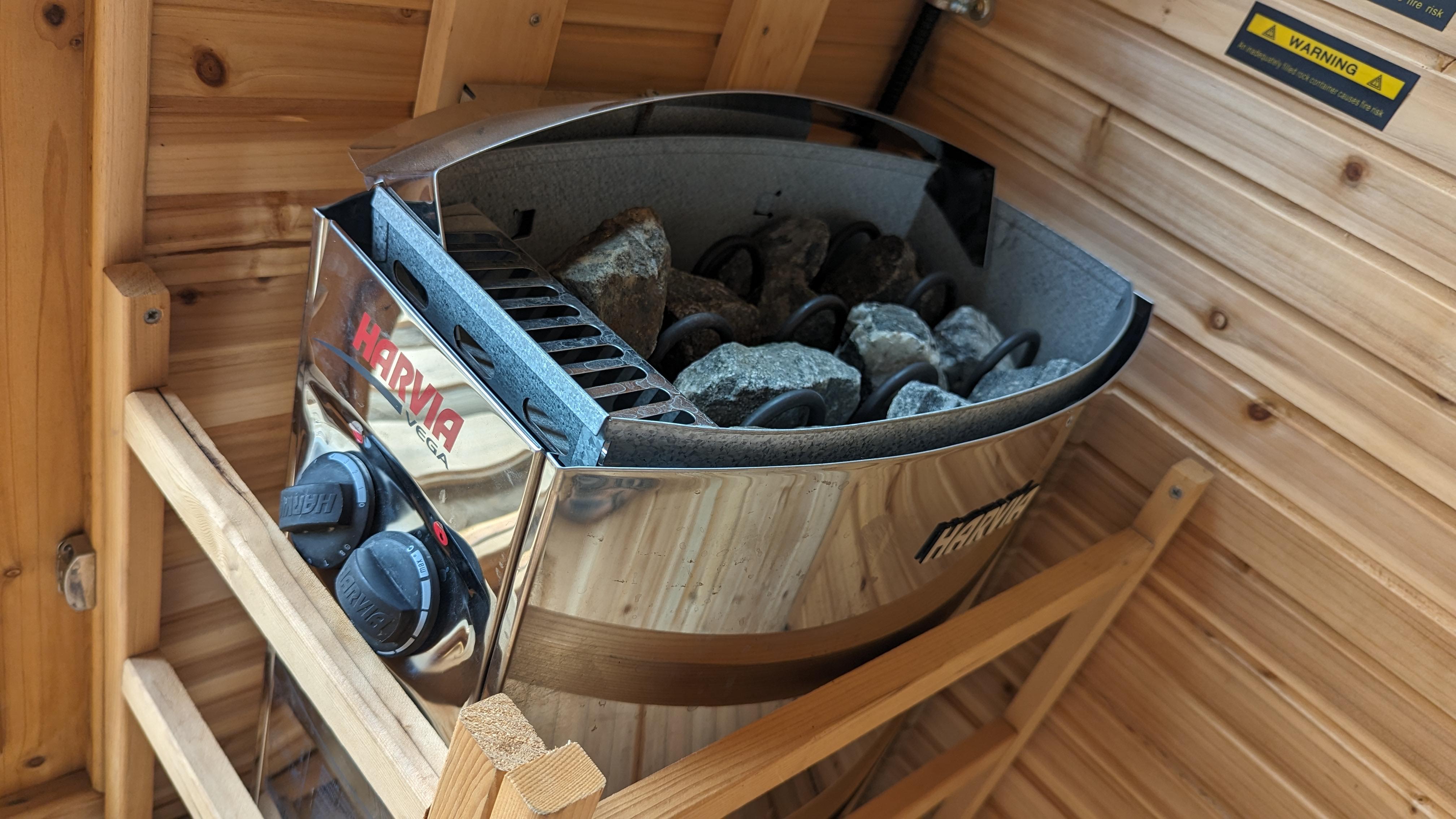
Should stones be full top to bottom and fully covering elements ...
This fatigues faster, muting systemic responses like circulation boosts. Ample stones and matched power ensure nurturing warmth.
Bad or absent airflow turns sanctuary to stuffy box: no convection means stale air, headache-prone exits, and muted benefits.
Passive low-in/high-out vents refresh naturally, keeping sessions invigorating.
Reality favors rectangular, thoughtfully proportioned designs with intentional details.

Our approach sidesteps myths for enduring function—pure materials, balanced elements, profound renewal.